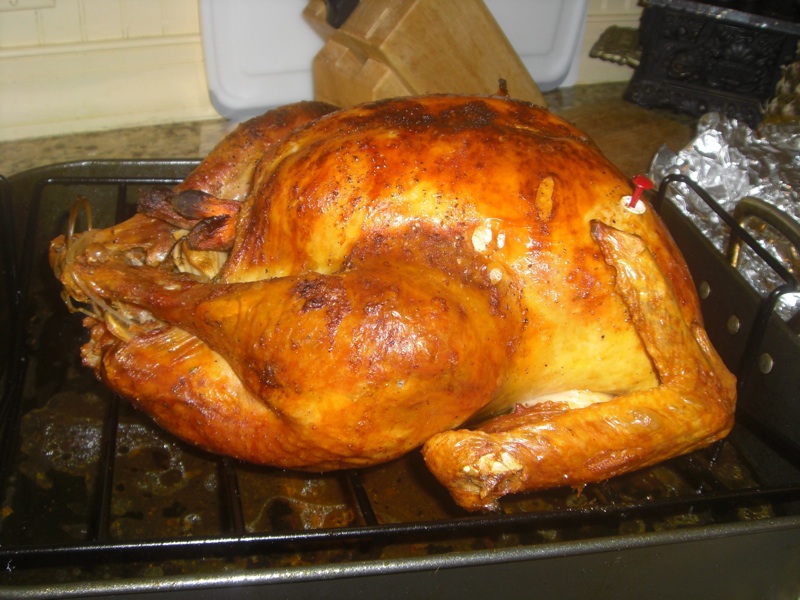
 For 25 years I have tried to make the perfect turkey. I’ve basted them, tied them, stuffed them, bagged them and brined them. I’ve made turkey breasts for smaller crowds. I’ve talked to friends and relatives, watched The Food Network, read magazines and newspapers about turkey preparation. I was almost down to frying one, until I found out that the peanut oil you have to buy costs $28. And that’s at Walmart!
Unfortunately, turkey is bland and dry for the most part, so some miracle, i.e. ACT OF GOD, must happen for it to come out right. The worst turkey ever was when my young daughter, Beth, went downstairs to get the candlesticks and the china cabinet glass broke and sliced part of her finger off. I had just put the turkey in the oven when I had to go downstairs and grab her finger part and go to the emergency room. While we were gone, no one even looked at the turkey, let alone basted it or, heaven forbid, take it out of the oven. When I got back, my mother, husband and kids were outside decorating for Christmas. Hey, one holiday at a time people!! The turkey had turned into shoe leather and not one drop of juice left to make a gravy. I guess if it had caught on fire, someone might have noticed. Or maybe not. Needless to say, I wasn’t happy.
Shortly after that episode, I was turned on to brining. Now, you might ask: What is brining? Brining makes poultry moist. The salt forces the meat tissues to absorb water and flavorings. It also breaks down the proteins, resulting in a tender juicy turkey. This means that you can roast the bird for a long time and still have moist meat.
Brining with water and flavorings is popular. I use to do this. I put spices in my brine, like juniper berries, all spice berries, rosemary, fruit, other strong herbs like rosemary etc. Some add apple juice, etc. Personally, I don’t want a lot of strong smells and tastes in my gravy, so after a few years I decided to just use subtle flavors I preferred.
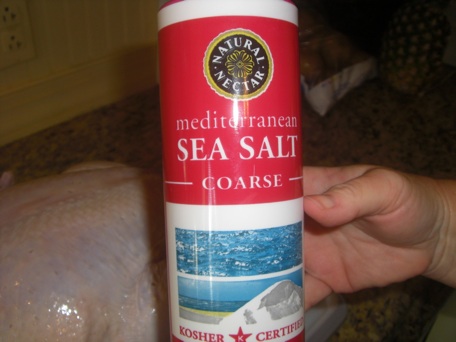
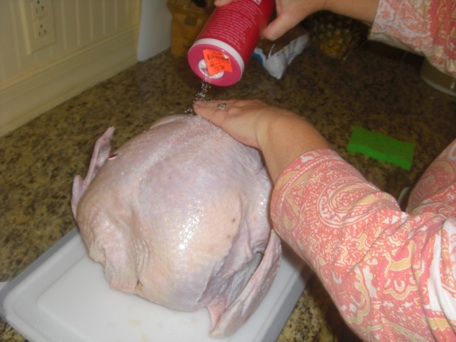
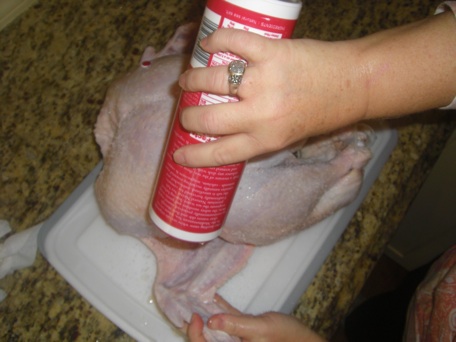
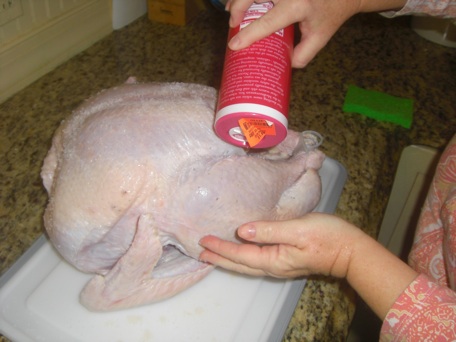
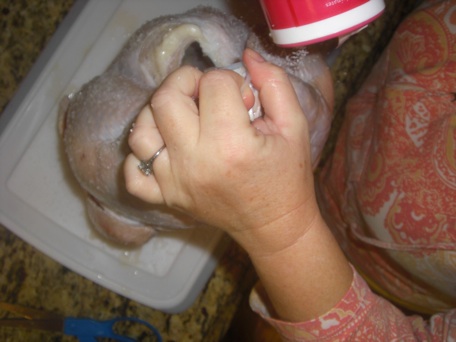
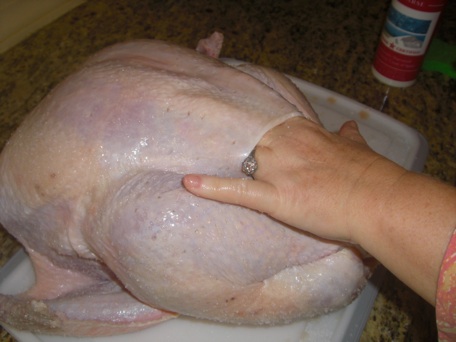
Then I read an article on dry brining. I always hated the whole wet brine because it was messy and a pain. I’d have to find a large container to put the turkey in and then hope it was cold outside, because it wouldn’t fit in my fridge. Dry brining is so much easier and it comes out perfect every time and is crispy and moist if you follow a few simple steps. The turkey won’t be as salty as you think, however, you can taste the salt and you don’t have to add any additional salt to your bird or the gravy.
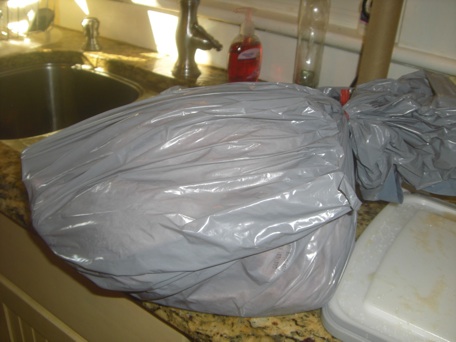
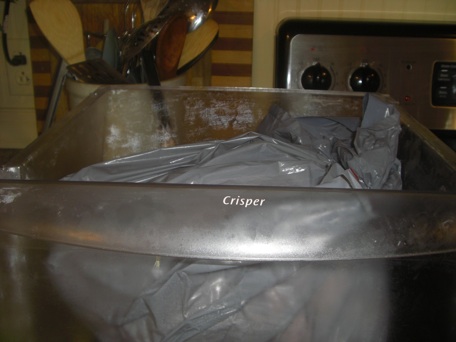
Basically, I dry brine it for a day, rinse and dry it and stuff it with lemons, herbs, onions, carrots and apples, butter and pepper it, stick it in a hot oven (450 degrees) for 30 minutes and then at 350 degrees until done. Perfect AND it makes the best gravy.
The 25 Year Turkey
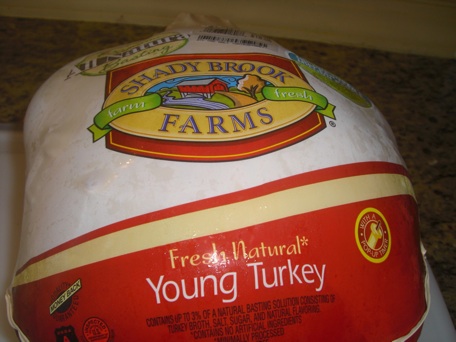
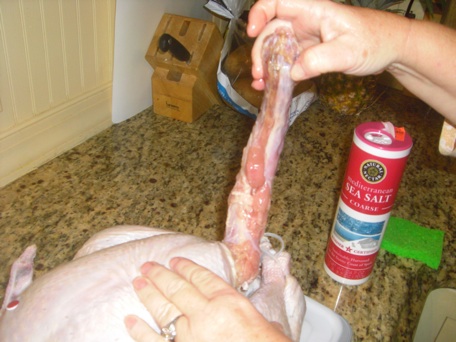
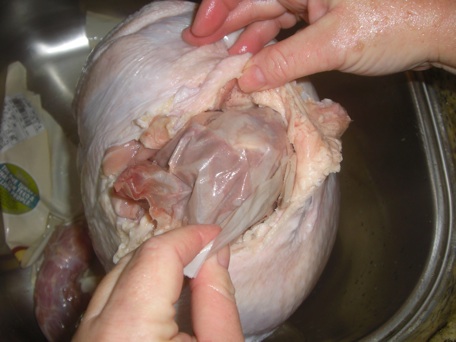
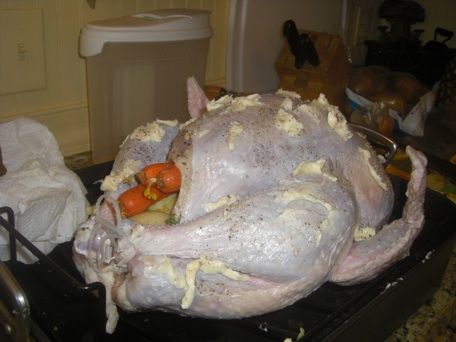
Put turkey on a roasting pan (breast side up) with a rack into a 450 degree oven. Roast for 30 minutes ONLY. Your house might get a little smokey, but this is the most important step to ensure a crispy skin. Just open a window.
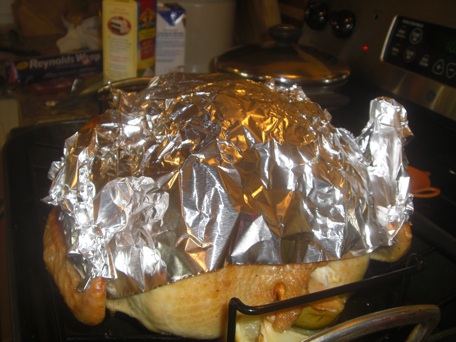
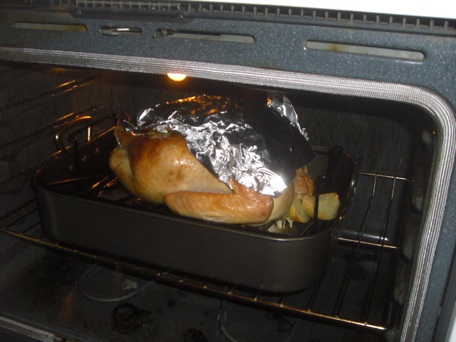
After 30 minutes, reduce temperature to 350 degrees and remove turkey from oven. In bottom of pan, put about 1.5 cups of liquid. I use a combination of white wine and chicken broth. (The broth you make from the giblets is perfect for this, otherwise unsalted canned broth is fine too.) 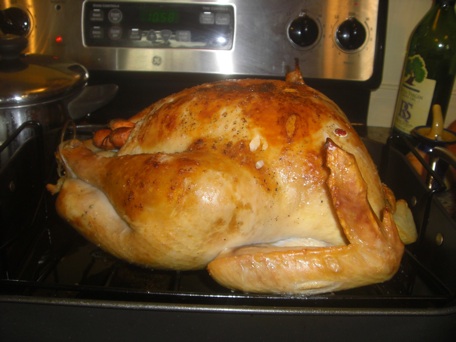
Even though this entry is not about gravy, I’ll try tell you how to make it. Sorry I don’t have any pictures.
Put the roasting pan straddle across two burners and bring to medium heat. Have flour, chicken broth and/or water handy. Add a handful of flour and wisk it back and forth until there are no lumps. Make sure it boils at least a minute after adding flour. Add liquid to get the right consistency. You could also make a slurry of flour and liquid together and pour into the juices, however, making gravy is a practiced art form, so you may have to adjust amounts of flour and liquid as you go. If the gravy sets for any period of time on warm it will also thicken. Just add water or both to thin it out. If you’ve got lumps strain the gravy. Then add the giblets.
Cut the turkey down each side of the breast bone and slice the breast meat in large hunks. Don’t kill yourself or torture your husband to thinly slice the turkey. Remove the legs and serve breast meat and legs on platter. If you want more dark meat, add it.

Now that’s a lot to be thankful for!
 Regular Cooks